
Definition of a Service Animal
According to the AODA’s Customer Service Standards, one of two conditions must apply for your animal to be considered a service animal:
- the animal is easily identifiable as relating to your disability (for example, it is a guide dog for the blind that is wearing a harness or other animal wearing a vest)
- you can provide documentation from a regulated health professional confirming the animal is required due to a disability
Service animals are not pets. Additional fees or requirements that apply to pets do not apply to service animals.
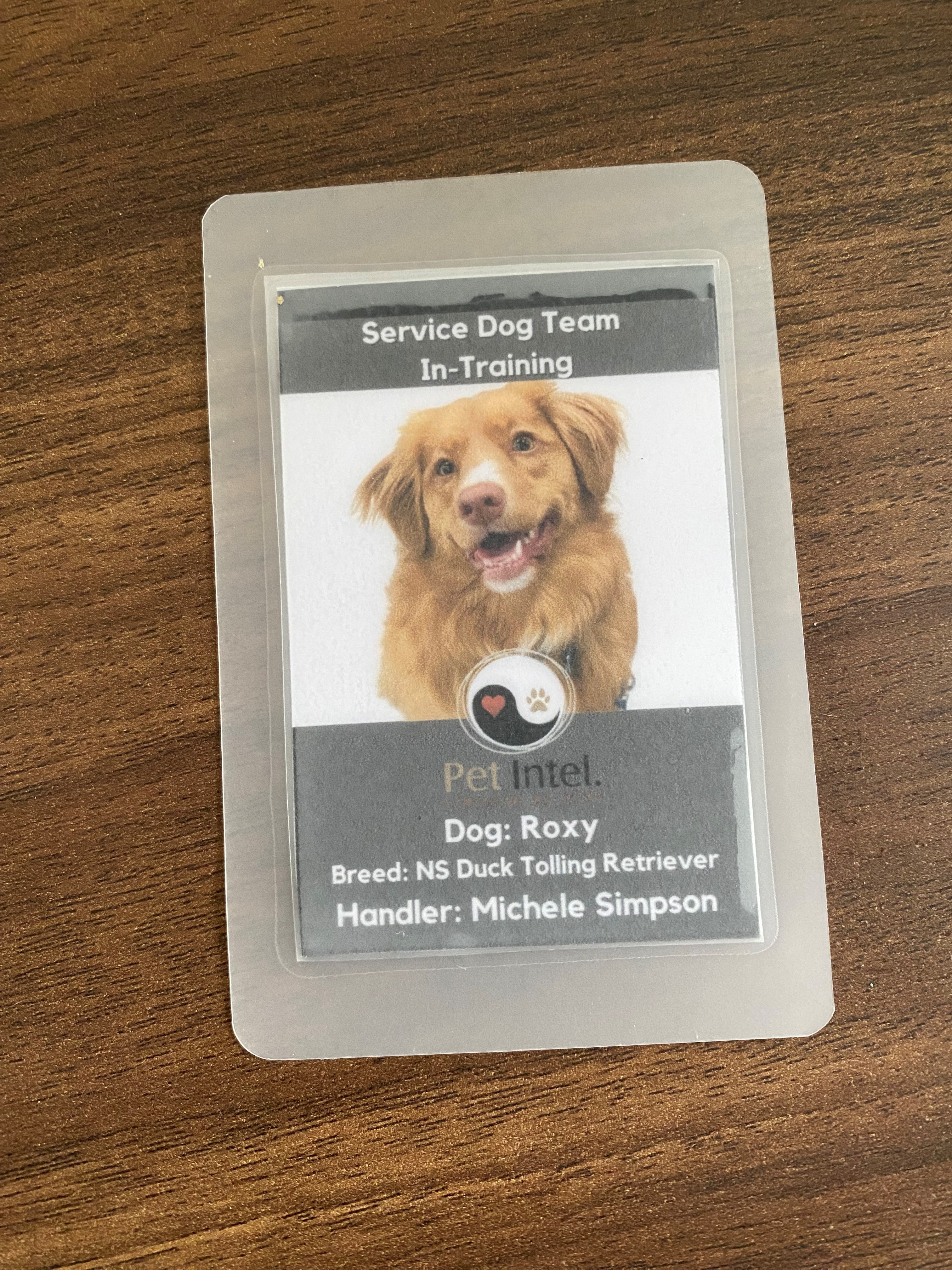
Documentation and certification
Under the Ontario Human Rights Code and the AODA, service animals do not need to have certificates or identity cards.
However, you may be asked to provide acceptable documentation. This includes:
- documentation from a regulated health professional (I have a letter from my family doctor).
- an identification card from the Ontario Ministry of the Attorney General for people who are blind and use a guide dog
- in our case, Roxy and I have identification from our trainer Jessica from Pet Intel (pic above)
Understanding Service Animals
What do service animals do?
Providers know that service animals help their handlers maintain their independence, but might still wonder what, exactly, service animals do. Service animals help people with disabilities or conditions such as:
- Visual impairments
- Diabetes
- Epilepsy
- Autism
- Hearing disabilities
- physical disabilities
Moreover, they perform tasks, such as:
- Guiding a person around obstacles
- Alerting a person about low blood sugar levels
- Protecting a person during seizures
- Calming a person in an environment with too much sensory stimulation and preventing behavioural outbursts
- Retrieving out-of-reach objects
- Alerting a person to sounds
Access
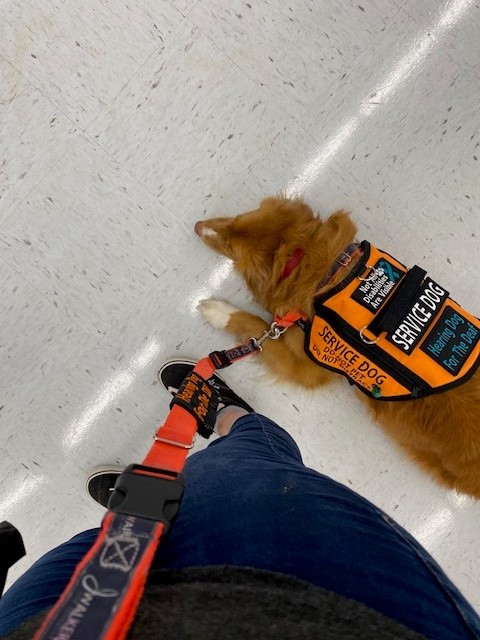
Furthermore, service animals assist their handlers everywhere in their communities, including places and events such as:
- Stores
- Restaurants
- Buses, taxis, trains, and planes
- Hotels
- Government buildings
- Schools, colleges, and universities
- Places of Worship
- Movie theatres, concerts, and sports games
- Amusement parks
https://www.ontario.ca/page/accessibility-ontario-what-you-need-to-know#section-7
Dos and don’ts when encountering service animals
What does it really mean to welcome customers with service animals? Once customers and their service animals are on the premises, what should providers do? What shouldn’t they do? Here is a list with some suggestions.
For instance, do:
- Pay attention to the owner, not the animal
- Ask what tasks the animal assists with, not what the handler’s diagnosis is
On the other hand, don’t:
- Ask that the animal be left elsewhere
- Pet the animal, unless its handler gives permission
- Call the animal
- Feed the animal
- Entice the animal with toys
- Disturb the animal if it is sleeping
Handlers understand that people are curious about their animals and are often happy to answer a few questions about them.
 ottawadeafgirl
You must be logged in to post a comment.